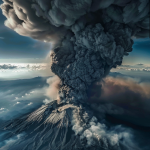
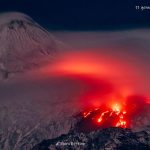
Mount Etna, one of the most active and unpredictable volcanoes in the world, has once again demonstrated its power.
The Eruption of Etna: Booms and Ash
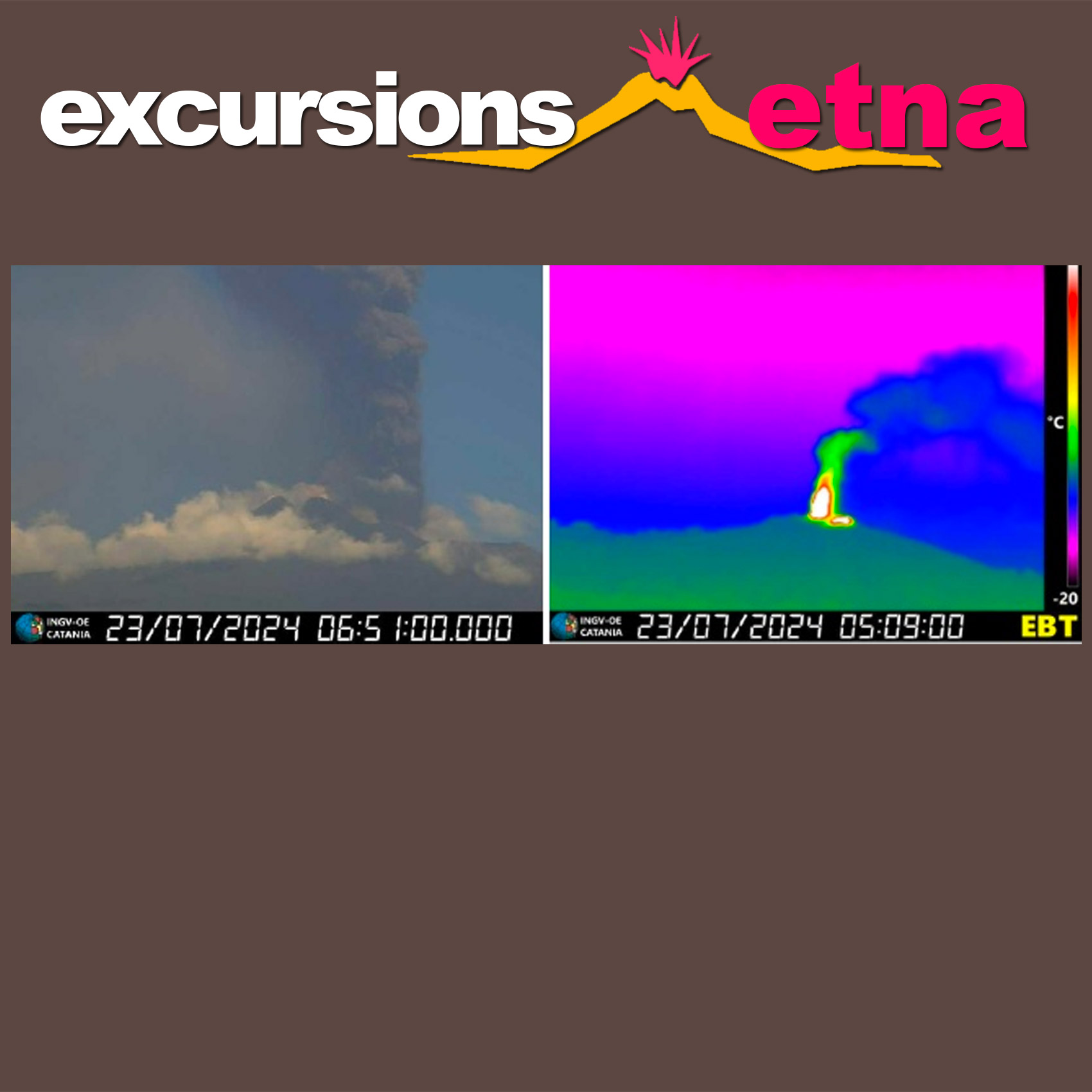
Etna erupts again: ash rain over Catania airport, all flights suspended. Loud booms reported. The intense activity is coming from the Voragine crater.
At the bottom of this article, you can find videos taken Tuesday morning by Etna North volcano guides and some local residents.
Imagine being on a tranquil Sicilian day, surrounded by the island’s gentle landscapes, when suddenly the sky darkens and a primordial energy emerges from the depths of the earth. This is exactly what happened with the recent eruption of Etna, Europe’s tallest active volcano and one of the most studied in the world.
The new eruption was particularly intense, with the Voragine crater releasing a cloud of ash several kilometers high, accompanied by loud explosions and spectacular lava fountains. The significant Strombolian activity created a natural spectacle visible from miles away but also had significant consequences for the surrounding communities.
Catania, the bustling city at the foot of the volcano, was one of the hardest hit by the ash rain. The Vincenzo Bellini International Airport, a crucial hub for air traffic in Southern Italy, had to suspend all incoming and outgoing flights, diverting several planes to Palermo. The airport management company, SAC, immediately communicated that the closure of sectors B2 and B3 was necessary to ensure safety and advised passengers to contact their airlines for updates.
As the ash settled like a gray blanket over Catania, Etna continued to roar. The number of booms increased, with explosions so powerful they shook houses. The National Institute of Geophysics and Volcanology (INGV) observed a lava overflow from the Bocca Nuova crater and an increase in volcanic tremors. The tremor sources were located about 3,000 meters above sea level, indicating significant internal activity.
The volcano’s energy showed no signs of abating. The amplitude of the infrasonic tremor grew, and variations in the clinometric stations, particularly in the summit areas, revealed the continuous movements of magma (as mentioned in our previous article). This was a clear sign of the great energy animating Etna’s heart.
The central crater, Voragine, connected to the volcano’s primary source, expelling magma from the deepest parts of the system. This activity was extraordinarily energetic, a constant reminder of Etna’s power and wild beauty.
The residents of the Etna area are accustomed to the volcano’s manifestations, but each eruption brings a sense of wonder and respect.
Etna is more than a volcano: it is a living presence that embodies the history, culture, and identity of Sicily. Each eruption reminds us of how small we are in the face of nature’s force and how important it is to respect and protect our planet.
Discover the best excursions to explore the volcano.